Bring a Touch of Magic to Your Projects with Glowing Star
There’s a particular feeling you get when you see a design that feels genuinely personal—like it was crafted with care rather than assembled from generic parts. That feeling often starts with typography. Whether you’re designing a heartfelt greeting card, labeling products for your small business, or creating social media graphics that need to stop the scroll, the typeface you choose carries more weight than you might realize. It’s not just about legibility; it’s about emotion, personality, and connection. That’s where a decorative font like Glowing Star comes into the conversation.
More Than Just a Pretty Typeface
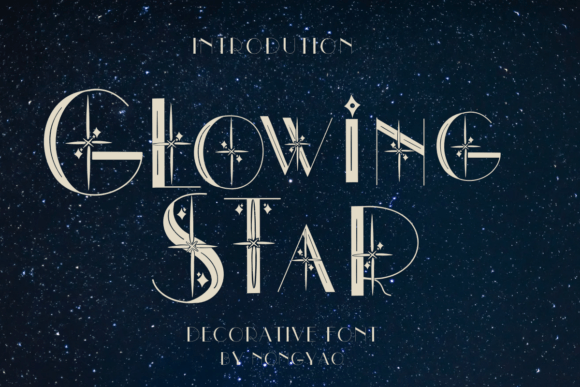
At first glance, Glowing Star presents itself as a whimsical, decorative display font. Its letterforms have a hand-crafted quality, blending playful curves with a certain warmth that feels inviting rather than childish. Think of it as the typographic equivalent of a cozy café chalkboard or the carefully penned title on a homemade gift tag. It doesn’t shout for attention with aggressive angles or stark lines; instead, it draws you in with its friendly, approachable character.
This makes it incredibly versatile for projects where you want to inject personality without sacrificing clarity. For a small business owner creating packaging for artisanal goods, for instance, Glowing Star can instantly communicate that the product inside is made with love and attention to detail. For a blogger designing featured images or Pinterest pins, it can help establish a recognizable, cohesive visual style that readers begin to associate with your content.
Where Glowing Star Truly Shines: Practical Applications
The real test of any creative font isn’t just how it looks in a specimen sheet, but how it performs across different contexts. Glowing Star holds up surprisingly well in a variety of scenarios, which is a testament to its balanced design. It’s not overly ornate to the point of being illegible at smaller sizes, yet it has enough distinctive flair to make a statement in headlines or logos.
Consider using it for:
- Branding and Logo Design: For businesses targeting a younger demographic or those in creative fields (think bakeries, boutiques, craft studios, or event planners), Glowing Star can form the basis of a friendly, memorable wordmark. Pair it with a simple, clean sans-serif for body text to maintain readability.
- Packaging and Labels: On product packaging, especially for items like candles, cosmetics, or gourmet foods, this font can add a touch of artisanal charm. It works well for product names or short descriptive phrases.
- Social Media Graphics: Instagram stories, Facebook posts, and YouTube thumbnails thrive on visual personality. Using Glowing Star for key phrases or titles can make your graphics feel more engaging and less like a corporate template.
- Invitations and Greeting Cards: This is a natural home for the font. Its decorative nature makes it perfect for wedding invitations, birthday cards, holiday greetings, and thank-you notes where a personal touch is paramount.
- Merchandise and Stationery: Think about custom mugs, tote bags, journals, or planners. A font like Glowing Star can turn a simple item into something that feels special and curated.
- Editorial Layouts and Digital Products: For magazine headers, blog post titles, or the covers of digital downloads like e-books and worksheets, it can break the monotony of standard serif and sans-serif fonts, adding visual interest.
Integrating Glowing Star into Your Design Workflow
Simply liking a font isn’t enough; you need to know how to use it effectively. Here’s some practical advice for incorporating Glowing Star into your projects without common pitfalls.
Pairing is Everything. A decorative display font like Glowing Star is rarely meant to stand alone for large blocks of text. Its strength is in headlines, subheads, and short callouts. The key is to pair it with a highly readable, neutral typeface. A classic sans-serif like Open Sans, Lato, or Montserrat often works beautifully, providing a clean counterbalance. For a more traditional or elegant feel, a simple serif like Lora or Merriweather can also create a pleasing contrast. Always test your pairings in context—see how they look together on a mockup before finalizing.
Consider Your Scale and Hierarchy. Use Glowing Star where it will have the most impact. Typically, this is for the main title, a key headline, or a featured quote. Use your paired, more neutral font for body copy, descriptions, and smaller text elements. This creates a clear visual hierarchy that guides the viewer’s eye naturally through your design.
Readability is Non-Negotiable. Even with a decorative font, your message must be clear. Avoid using Glowing Star in long sentences at very small sizes, especially on digital screens. Test it at the intended size on different devices and in print if possible. Its design is generally legible, but context matters—a busy background or low contrast can undermine even the best typeface.
Review the Included Styles. Many premium fonts, including quality display fonts, come with more than one style. Check if Glowing Star offers alternates, ligatures, or additional weights. These variations can give you more flexibility to fine-tune the look, perhaps using a slightly different ‘a’ or ‘g’ to better fit your composition.
A Final Note on Licensing and Professional Use
For anyone using a font for commercial projects—whether it’s for client work, products for sale, or monetized content—understanding the license is crucial. A reputable commercial font like Glowing Star will come with a clear license that outlines permissible uses. Typically, this includes things like logo design, merchandise, web fonts (via @font-face or services), and printed materials. However, it’s always your responsibility to read and comply with the terms. This isn’t just about legal protection; it’s about respecting the work of the type designers who created the asset you’re using.
In the end, choosing a typeface like Glowing Star is about adding a specific voice to your visual communication. It’s a tool that, when used thoughtfully, can help bridge the gap between a generic design and one that feels genuinely crafted. It won’t be the right choice for every project—a serious financial report or a minimalist tech startup’s website would call for something different. But for the baker labeling her jams, the planner designing a wedding suite, or the creator building a recognizable brand on social media, it offers a wonderful blend of charm and utility. The best designs often come from tools that fit the task perfectly, and for a surprising number of creative projects, Glowing Star does exactly that.