Sailors: A Versatile Sans Serif Font for Modern & Vintage Design
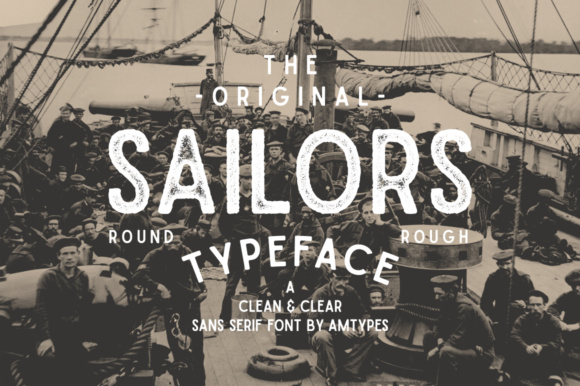
There's a moment in every design project where the typeface either locks the whole thing together or sends you back to the drawing board. You've nailed the colors, the layout feels balanced, the imagery works—and then you drop in a font that's too fussy, too cold, or just plain wrong for the mood you're building. That's exactly the kind of frustration the Sailors typeface was built to solve. It's a clean, sans serif font family with five distinct styles, and it's designed to move fluidly between polished modern work and projects that need a warmer, more textured personality.
What makes Sailors worth a closer look isn't just its range—it's how thoughtfully that range has been put together. The Regular style is crisp and contemporary, the kind of typeface that sits comfortably on a startup's homepage or a minimalist product label. But switch to the Rough style and suddenly you've got a gritty, hand-stamped quality that feels like it was pulled from a vintage workshop sign. The Condensed version saves space without losing legibility, while the Slant and Condensed Slant options add directional energy that works beautifully for headlines, banners, and anything that needs to feel like it's in motion.
Where This Font Family Actually Shines
Talking about font styles in the abstract only gets you so far. The real question is whether a typeface can hold its own across the messy, varied reality of actual design work. Sailors handles that challenge well because its five styles aren't just slight tweaks of the same skeleton—they each carry a noticeably different visual weight and mood.
Consider a small roasting company building its brand identity from scratch. The Regular style might go on the website headers and the "About Us" page—clean, readable, professional. The Rough style could take over for the coffee bag labels, giving them that artisan, small-batch character that customers respond to. The Condensed Slant might appear on social media sale announcements, adding urgency without resorting to all caps or excessive exclamation marks. One font family, three very different jobs, and everything still looks like it belongs together.
That kind of visual consistency is harder to achieve than most people realize. When you pull typefaces from multiple sources—say, a free script font for one piece and a premium display font for another—you're constantly fighting to make them coexist. With a family like Sailors, the relationship between styles is already baked in. The letter shapes, the proportions, the overall personality—they share enough DNA that mixing and matching within the family feels natural rather than forced.
Practical Applications Across Design Disciplines
Let's get specific about where this typeface earns its keep. Logo design is an obvious starting point. A wordmark set in Sailors Rough has immediate character—it suggests craft, authenticity, and a certain handmade quality without actually being a script or handwritten font. For businesses that want to signal approachability and creativity rather than corporate sterility, that's a sweet spot. Meanwhile, the Regular style works for logos that need to feel clean and scalable, especially when the mark will appear at small sizes on mobile screens or embossed on packaging.
Packaging design is another area where the font's versatility pays off. Product labels need to communicate clearly at a glance, but they also need personality. The condensed styles are particularly useful here because they let you fit more information into tight spaces—ingredient lists, taglines, size indicators—without resorting to tiny, unreadable text. Pair the Condensed Slant for a header with the Regular for body copy, and you've got a hierarchy that guides the eye and looks intentional.
For social media graphics, the Slant and Condensed Slant styles bring a sense of movement that static images often need. Instagram stories, quote cards, promotional banners—these formats reward type that feels energetic without being chaotic. The rough texture in the Rough style also adds visual interest at the small sizes most social content is viewed at, giving your posts a distinctive look in a crowded feed.
Then there's editorial design and print materials. Think about event posters, zine layouts, festival programs, or even wedding invitations. The Slant style can carry a headline with real presence, while the Regular handles the details—dates, addresses, RSVP information—with straightforward clarity. For bloggers and content creators who produce downloadable resources like planners, worksheets, or digital guides, having a typeface that reads well in long-form text while still feeling designed (not default) is a genuine advantage.
Matching the Right Style to Your Project
Choosing between five styles might sound simple, but it's worth pausing to think about what each one communicates. The Regular style is your workhorse—neutral enough for body text, strong enough for headlines. It's the safe starting point when you're unsure, and there's nothing wrong with that. Most professional design relies on restraint more than novelty.
The Rough style introduces texture and imperfection. It suggests age, warmth, and craftsmanship. If your project references anything vintage, handmade, outdoorsy, or artisanal, this is likely your strongest option. It's particularly effective for brands in the food and beverage space, outdoor recreation, craft brewing, or boutique retail—anywhere that "authentic" and "handcrafted" are part of the story.
Condensed styles solve a practical problem: fitting type into narrow spaces. But they also create a visual rhythm that's subtly different from standard-width fonts. Condensed letterforms feel taller, more assertive, more architectural. They work well for stacked wordmarks, sidebar headlines, and any layout where vertical emphasis adds to the design's energy.
The Slant styles add forward motion. They're not true italics—they have a more deliberate, graphic tilt that reads as dynamic rather than merely tilted. Use them sparingly for maximum impact: a single headline, a pull quote, a call-to-action button. Overusing slanted type can make a layout feel unstable, but in the right dose, it's a powerful tool.
Pairing Sailors with Other Typefaces
No font exists in isolation, and even a versatile family like Sailors benefits from thoughtful pairing. Because it's a sans serif font with a clean structure, it plays well with a wide range of complementary typefaces. A classic serif font for longer body text creates a nice contrast when Sailors handles the headlines—think of it as the modern-meets-traditional dynamic that works so well in editorial layouts and blog design.
If you're going for a more contemporary feel, pairing Sailors with a simple geometric sans serif for supporting text keeps the palette tight and cohesive. For projects that lean into the vintage aesthetic, a subtle script font used sparingly—maybe just for a tagline or accent phrase—can add an extra layer of personality without competing with Sailors' presence.
The key principle is contrast with purpose. Don't pair two fonts that are too similar in weight, width, or mood—that creates confusion rather than hierarchy. Instead, let each typeface have a clear role. Sailors is strong enough to anchor a design, so give it space and let supporting fonts do quieter work.
Licensing and Commercial Use Considerations
One practical detail that often gets overlooked until it's too late: licensing. If you're using a font for client work, merchandise, or any commercial application, you need to know the license covers that use. Sailors comes with a commercial license, which means you can use it confidently in branding projects, product packaging, digital products for sale, and marketing materials without worrying about legal gray areas.
This matters more than people think. I've seen designers build entire brand systems around fonts they downloaded for personal use, only to hit a wall when the client asks for a commercial license—or worse, discover the font's license doesn't extend to merchandise. Starting with a properly licensed font eliminates that headache entirely and protects both you and your clients.
Sailors gives you a lot of creative range in a single package—five styles that cover everything from clean and corporate to textured and vintage. Whether you're building a brand identity from the ground up, designing a product line, or just looking for a typeface that won't feel generic in your next project, it's a solid addition to any designer's toolkit. The real value isn't in any single style—it's in having a coherent family that lets you adapt to different contexts without losing visual unity.