Montreal: A Geometric Sans Serif for Modern Brands
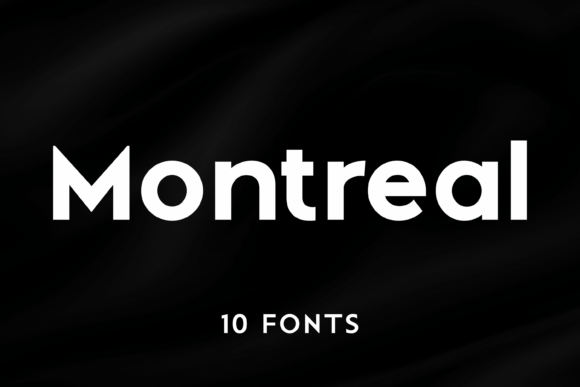
There’s a particular kind of design challenge that calls for a typeface that feels both crisp and adaptable—something that can anchor a bold poster headline without looking aggressive, and sit comfortably in a long paragraph without feeling sterile. Montreal, a geometric sans-serif typeface with 10 distinct styles, is built for exactly that range. It’s not about shouting; it’s about clarity with character. If you’ve been searching for a font that balances modern minimalism with enough warmth to feel approachable, Montreal is worth a closer look.
Why Geometric Sans Serifs Like Montreal Work So Well
Geometric sans serifs are built on simple shapes—circles, squares, and clean lines—which gives them a structured, contemporary feel. Montreal takes that foundation and adds subtle refinements: slightly softened corners, thoughtful spacing, and a rhythm that keeps text readable even at smaller sizes. Unlike some overly rigid geometric fonts, Montreal doesn’t feel cold or mechanical. It has just enough personality to feel human without sacrificing the precision that makes geometric type so versatile.
What makes Montreal practical is its range. With 10 styles—from the delicate Montreal Light to the commanding Montreal Black—you can maintain visual consistency across an entire brand system without needing to mix different font families. That’s a huge advantage when you’re building a visual identity that needs to work across a website, packaging, social media, and print materials. You’re not just getting a single font; you’re getting a toolkit.
Putting Montreal to Work: Practical Applications
Let’s talk about where Montreal actually shines in real projects. If you’re designing a logo, Montreal’s clean geometry makes it easy to create a mark that feels modern and scalable. It works well for wordmarks, monograms, or as a secondary font supporting a more expressive script or serif. For packaging design, Montreal’s legibility ensures that product names, ingredients, and instructions read clearly—even on small labels or curved surfaces.
On screens, Montreal holds up beautifully. Its even proportions and open letterforms make it a strong choice for web design, where readability across devices matters. Use Montreal Regular or Medium for body text on blogs or digital products, and switch to Montreal Bold or Black for headlines that need to grab attention without overwhelming the layout. Social media graphics benefit from its versatility too: Montreal can feel professional for a LinkedIn infographic, playful for an Instagram story, or elegant for a Pinterest pin, depending on the style you choose.
Print projects—from posters to invitations to editorial layouts—also benefit from Montreal’s balance of style and function. Its geometric structure gives invitations a contemporary edge, while its lighter weights can add sophistication to magazine spreads or business cards. If you’re creating merchandise like t-shirts or tote bags, Montreal’s bold styles ensure your message stands out, while its lighter weights offer a subtler, refined look for minimalist designs.
How Montreal Supports Brand Consistency and Recognition
One of the biggest challenges in branding is maintaining a consistent look across every touchpoint. Montreal’s family of 10 styles allows you to create a typographic hierarchy that feels cohesive. For example, you might use Montreal Black for headlines, Montreal Medium for subheadings, and Montreal Regular for body text. Because all the styles share the same geometric DNA, they work together seamlessly—without the visual clash that can happen when mixing fonts from different families.
Consistency builds recognition. When your audience sees the same typeface across your website, packaging, social media, and print materials, it starts to associate that visual language with your brand. Montreal’s modern, clean aesthetic is particularly effective for brands that want to convey innovation, clarity, or sophistication—think tech startups, creative agencies, boutique retailers, or lifestyle brands. It’s not a font that tries too hard; it lets your content and brand personality come through.
Tips for Choosing the Right Montreal Style
With 10 options, how do you pick the right one? Start by considering your project’s tone and medium. For large headlines or posters, Montreal Black or Montreal Bold makes a strong visual impact. For body text in books, blogs, or websites, Montreal Regular or Montreal Light offers excellent readability. If you’re working on a brand identity, test a few styles in context: how does Montreal Medium look on a business card versus a website header? Does Montreal Light feel too delicate for a product label?
Font pairing is another consideration. Montreal plays well with other typefaces. Pair it with a serif font for a classic-meets-modern look, or with a script font for a touch of elegance. For example, Montreal Bold paired with a refined serif like Playfair Display can create a beautiful contrast for wedding invitations or editorial layouts. On a website, Montreal Regular might work well with a handwritten font for pull quotes or call-to-action buttons. Always test pairings in real mockups before finalizing your choice.
Don’t forget about readability. Even the most stylish font fails if people can’t read it. Montreal’s even spacing and clear letterforms help, but you still need to consider size, contrast, and line length. For body text, stick to Montreal Regular or Light at a comfortable size—usually 16px or larger on screens. For print, ensure there’s enough contrast between the font color and the background. Test your designs on different devices and in different lighting conditions to catch any legibility issues.
Licensing and Practical Considerations
If you’re using Montreal for commercial projects—client work, products for sale, or marketing materials—make sure you understand the licensing terms. Most premium fonts, including Montreal, require a commercial license for business use. Check whether the license covers your intended use, such as embedding in digital products, printing on merchandise, or using in advertising. Some licenses are based on the number of users or the scale of distribution, so review the details carefully to avoid surprises later.
Also, consider how you’ll manage the font files. Keep them organized in a dedicated folder, and make sure your team or collaborators have access if needed. If you’re working with a web developer, provide the webfont files or license information so they can implement Montreal correctly on your site. Taking these small steps upfront saves headaches down the road.
Final Thoughts on Working with Montreal
Choosing a typeface is a design decision that affects how your audience perceives your brand. Montreal offers a balanced, versatile foundation that works across countless applications—from digital interfaces to printed materials, from bold headlines to fine print. Its geometric structure brings clarity and modernity, while its range of styles gives you the flexibility to adapt to different contexts without losing cohesion.
If you’re building a brand, launching a new product, or refreshing your visual identity, Montreal is a typeface worth exploring. It’s not about following trends; it’s about choosing a tool that supports your communication goals with reliability and style. Try it out in a few mockups, test it with your existing brand elements, and see how it feels in action. Sometimes, the right font isn’t the flashiest one—it’s the one that quietly does its job exceptionally well.