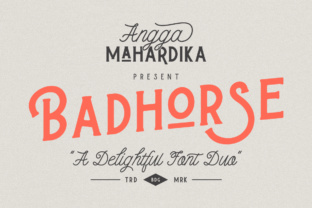
Badhorse: A Font Duo That Balances Clean Lines with Personality
Every designer knows the struggle: you need a typeface that feels both polished and approachable, professional yet full of character. Too often, serif fonts can feel stiff, while script fonts risk looking messy or overly casual. Badhorse solves this by pairing a clean, modern serif with a complementary script, giving you a versatile toolkit for projects that demand both structure and flair. It’s the kind of font that lets you build a complete visual language without needing to hunt for multiple typefaces that work together.
Understanding the Two Halves of Badhorse
At its core, Badhorse is a font duo. The serif component is crisp and legible, with a contemporary feel that avoids the stuffiness of some traditional serifs. It’s perfect for body text, subheadings, or anywhere you need clear, readable typography. The script half, meanwhile, brings a handwritten, playful energy. It’s not overly formal or calligraphic—it has a relaxed, natural flow that feels inviting and personal. Together, they create a balanced pairing that can adapt to a wide range of creative needs.
What makes this combination particularly useful is how seamlessly the two styles relate. The x-heights, stroke weights, and overall proportions are designed to complement each other, so you can mix them without the result feeling disjointed. For example, you might use the serif for a product description and the script for the brand name on packaging, creating visual interest while maintaining cohesion.
Where Badhorse Really Shines: Practical Applications
Think about a small business owner designing their brand identity. They need a logo that’s distinctive but readable, a website that feels professional, and social media graphics that stand out in a feed. Badhorse offers solutions across all these touchpoints. The serif font can anchor the main text on a website, ensuring readability, while the script adds a personal signature to logos, hero images, or promotional banners.
For packaging design, this font duo is a game-changer. Imagine a gourmet coffee label: the clean serif lists the origin, roast, and flavor notes with clarity, while the script font spells out the brand name or a tagline like “Small Batch, Big Flavor.” The contrast draws the eye and communicates both professionalism and artisanal quality. Similarly, for wedding invitations or event posters, the script can convey elegance or excitement, while the serif provides necessary details like dates, times, and locations in a format that’s easy to read.
Content creators and marketers will find it equally useful. A blog header using the script font can grab attention, while the serif ensures the article body is comfortable to read. For social media, the script works beautifully for quotes, announcements, or call-to-action text, while the serif is ideal for longer captions or infographics. The key is using each style where its strengths are most effective.
Tips for Pairing and Using Badhorse Effectively
While Badhorse is designed to work together, a few practical tips can help you get the most out of it. First, consider hierarchy. Use the script for headlines, logos, or focal points where you want to inject personality. Use the serif for supporting text, descriptions, or anywhere readability is paramount. This creates a clear visual flow that guides the viewer’s eye.
Second, pay attention to spacing and size. The script font often benefits from a slightly larger size or more generous letter-spacing to maintain legibility, especially in digital contexts. Test it at different scales—what looks great on a poster might need adjustment for a mobile screen. The serif, being more structured, typically holds up well across sizes.
Third, think about color and contrast. A dark serif font on a light background is a safe bet for readability, while the script can be more adventurous with color, especially for accent text. Just ensure there’s enough contrast so everything remains clear. Finally, always check the licensing if you’re using Badhorse for commercial projects. Most premium fonts like this come with clear licenses, but it’s worth confirming your intended use is covered—whether it’s for a client project, merchandise, or digital products.
Beyond the Basics: Creative and Professional Use Cases
For those in editorial design, Badhorse can bring a fresh dynamic to magazines, lookbooks, or newsletters. Use the serif for article text and the script for pull quotes, section headers, or author names. In web design, the combination can create engaging landing pages—imagine a script hero statement followed by serif bullet points detailing features or benefits.
Small business owners can leverage it for consistency across all materials: business cards, menus, price lists, thank-you notes, and even invoice headers. The font duo helps build a recognizable brand voice without requiring a design degree. For digital products like e-books, course materials, or printable planners, Badhorse adds a professional, curated feel that enhances perceived value.
Ultimately, Badhorse is more than just a pretty font—it’s a practical design asset. It saves time by providing a ready-made pairing that works, reduces the guesswork in typography, and helps create visuals that are both beautiful and functional. Whether you’re crafting a brand from scratch or refreshing an existing identity, it offers the flexibility to communicate with clarity and charm.