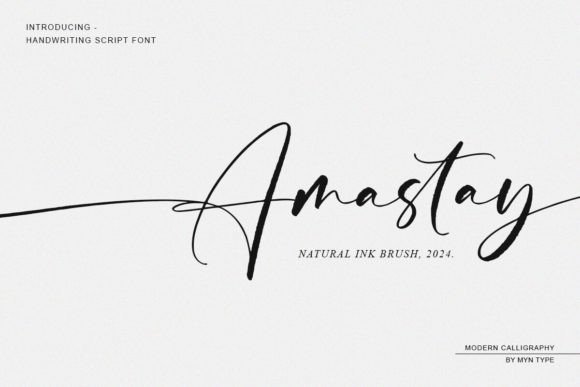
Amastay: The Calligraphy Font with Natural Ink Charm
There’s a certain magic in handwritten notes—a warmth that digital text often lacks. Amastay captures that magic beautifully, blending the fluidity of cursive calligraphy with the textured, organic feel of real ink. It’s not just another script font; it’s a design asset that brings personality and authenticity to any project. Whether you’re crafting a brand identity, designing wedding invitations, or creating social media graphics, Amastay offers a unique blend of elegance and approachability that feels both timeless and fresh.
Understanding Amastay’s Visual Personality
What sets Amastay apart is its balance between artistry and readability. The font features graceful swash tails that add movement and flair, while the slightly uneven edges mimic the natural variations of ink on paper. This isn’t a sterile, perfect script—it has character. The letterforms flow with a rhythm that feels human, making it ideal for projects where you want to convey warmth, creativity, or sophistication without seeming overly formal.
As a premium font designed for both display and functional use, Amastay works well at larger sizes for headlines and logos, but it also maintains legibility in shorter paragraphs. Its textured appearance gives depth to flat digital designs, and when printed, it adds a tactile quality that engages viewers. If you’re looking for a creative font that stands out from generic script typefaces, Amastay delivers a distinctive voice.
Practical Applications Across Creative Projects
One of the strengths of a versatile typeface like Amastay is its adaptability. Here’s how it can elevate different types of work:
- Brand Identity and Logo Design: For businesses that want to appear approachable yet polished—think boutique shops, artisan brands, or wellness coaches—Amastay adds a personal touch. It works beautifully for logos, business cards, and packaging where a handwritten feel builds trust and connection.
- Packaging Design: Imagine a product label for handmade candles, organic teas, or specialty foods. Amastay’s cursive style suggests care and craftsmanship, helping products stand out on shelves and convey quality.
- Social Media Graphics: In a crowded feed, Amastay can make quotes, announcements, or promotional posts feel more intimate and engaging. Its natural rhythm draws the eye without being overwhelming.
- Websites and Blogs: Used sparingly for headings or pull quotes, Amastay can break the monotony of sans serif body text, adding visual interest and guiding readers through content.
- Print Materials and Posters: Event invitations, restaurant menus, or artistic prints benefit from Amastay’s elegance. The font’s details hold up well in print, giving materials a luxurious, handcrafted look.
- Editorial Layouts and Digital Products: Magazines, e-books, or online courses can use Amastay to highlight key points, create visual hierarchy, and add a creative flair to otherwise standard layouts.
- Marketing Assets and Merchandise: From tote bags to promotional flyers, Amastay helps maintain a consistent brand voice across different mediums, reinforcing recognition and professionalism.
Pairing Amastay with Other Typefaces
While Amastay shines on its own, combining it with complementary fonts can create a more balanced and functional design system. A common strategy is to pair a script font with a clean sans serif or a simple serif font. For example:
- Use Amastay for headings or logos, and pair it with a neutral sans serif like Open Sans or Lato for body text to ensure readability.
- In editorial design, combine Amastay with a classic serif font such as Georgia or Times New Roman for a sophisticated contrast that feels both modern and timeless.
- For social media graphics, try mixing Amastay with a bold, geometric sans serif to create visual hierarchy and keep the overall design grounded.
Always test your font pairings in context—view them on different devices, at various sizes, and in both color and black-and-white. This helps ensure that your typography remains effective and legible across all applications.
Key Considerations for Using Amastay Effectively
To get the most out of Amastay, keep these practical tips in mind:
- Readability First: While Amastay is legible for short text, avoid using it for long paragraphs or small body copy. Its decorative elements work best when used strategically for impact.
- Spacing and Alignment: Script fonts often require careful kerning and leading. Adjust spacing to prevent letters from clashing, especially in larger displays.
- Color and Contrast: Amastay’s details can get lost in low-contrast color schemes. Ensure there’s enough contrast between the text and background for clarity.
- Commercial Licensing: If you’re using Amastay for client work or commercial products, verify the licensing terms. Most premium fonts like Amastay include licenses for both personal and commercial use, but it’s always wise to double-check for specific restrictions.
- Font Styles and Alternates: Explore the full character set—many premium fonts include swashes, ligatures, or stylistic alternates that can add even more uniqueness to your designs.
Why Typography Matters for Brand Recognition
Consistent use of a distinctive typeface like Amastay can significantly strengthen brand identity. When customers see the same font across your website, packaging, and social media, it builds familiarity and trust. Typography isn’t just about aesthetics; it’s a communication tool that conveys tone, values, and professionalism.
Choosing a font that aligns with your brand’s personality—whether it’s creative, elegant, approachable, or luxurious—ensures that every touchpoint feels cohesive. Amastay, with its natural ink texture and cursive flow, is particularly effective for brands that want to appear authentic, artistic, or human-centered.
Final Thoughts on Integrating Amastay into Your Workflow
Finding the right typeface can feel overwhelming, but Amastay simplifies the process for projects that call for a personal, handwritten aesthetic. It’s more than just a decorative script; it’s a versatile design asset that can adapt to various contexts while maintaining its unique charm.
Take the time to experiment with Amastay in different settings. Try it on a mock-up business card, test it in a social media template, or see how it looks in a website header. By understanding its strengths and limitations, you’ll be able to use it effectively to enhance your visual communication and create designs that resonate with your audience.